
There’s a moment during almost every apparel order when one number starts getting a little more attention than the others.
The unit price.
One shirt costs $6. Another costs $8.50.
Multiply that difference by 500 employees and suddenly the cheaper option looks less like a choice and more like common sense.
You can practically hear the spreadsheet celebrating.
And sometimes, it is the right choice.
But shirts have an inconvenient habit of continuing to exist after the invoice gets paid.
They get worn on 95-degree afternoons, ride around in work trucks, get covered in sweat, dust, sunscreen, grease, coffee, grass clippings, and whatever else the workday throws at them. Then they go home, meet the washing machine, the dryer, and come back Monday morning to do it all again.
That’s when the cheapest shirt gets its real test.
Three months later, one has shrunk. Another has faded. Someone says theirs “fits weird now.” A supervisor needs shirts for three new hires, but two sizes aren’t available.
Then comes the sentence every purchasing manager loves to hear:
“We need to order more.”
Suddenly, the cheapest order doesn’t look quite as cheap as it did on day one.
That’s the part a unit price can’t tell you.
Because there are really two prices attached to company apparel: what it costs to buy and what it costs to keep working.
The difference between those two numbers is where the interesting stuff happens.
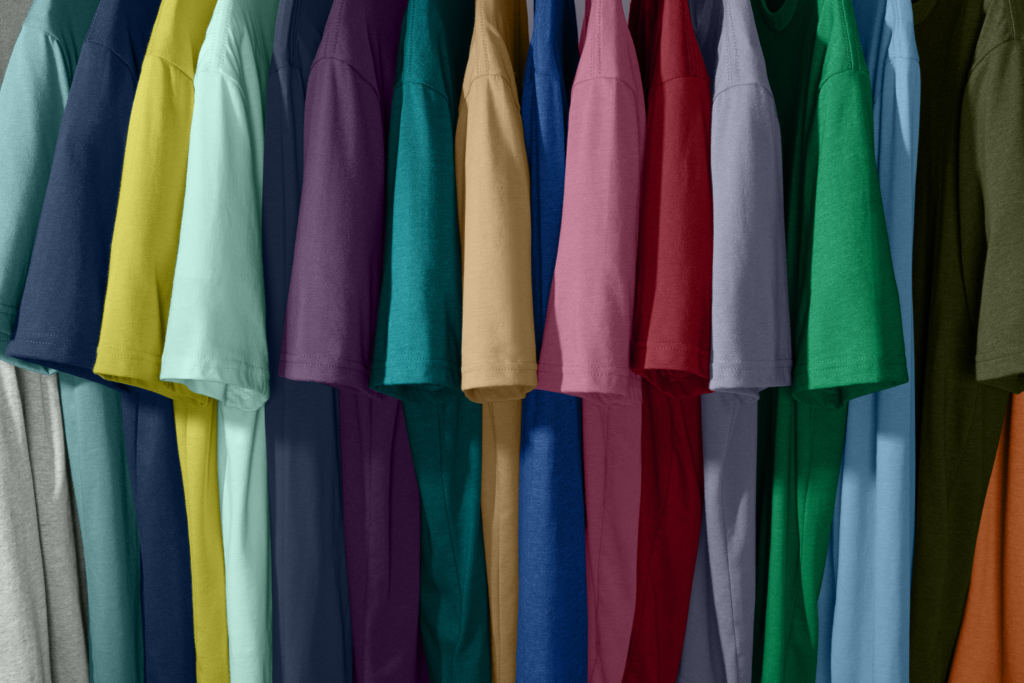
A $6 shirt doesn’t automatically perform like a $6 shirt.
And a $15 shirt doesn’t automatically perform like a $15 shirt.
Once employees start wearing them, price tags become irrelevant. The garment either works for the job or it doesn’t.
Consider something as ordinary as shrinkage.
An employee receives a medium that fits perfectly. A month of washing and drying later, that comfortable medium has become the shirt they tug at all day.
Nothing dramatic happened. There was no giant rip down the middle and no spectacular laundry disaster.
The employee simply stops choosing it.
That’s an important distinction because companies often measure garment life by physical failure. If the shirt doesn’t have holes, we assume it’s still doing its job.
Employees have a different definition.
If it’s uncomfortable, fits poorly, looks worn out, or feels miserable halfway through a shift, the shirt may have reached the end of its useful life long before it reaches the end of its physical life.
Fading works the same way.
Picture a crew meeting on Monday morning. Half the team received their navy shirts recently. The other half have been wearing theirs for months.
Technically, everyone is in the same uniform.
Visually, you’re looking at five different interpretations of navy.
Nobody planned that. It simply happened one wash at a time.
This is why cost per wear can tell a more interesting story than cost per shirt.
Suppose an $8 garment gives an employee about 20 useful wears before it gets replaced. That’s roughly 40 cents per wear.
Another costs $12 but stays in regular rotation for 50 wears. That’s roughly 24 cents per wear.
Of course, real garment life isn’t that tidy. Jobs, washing habits, fabrics, stains, working conditions, and employee preferences all affect longevity.
But the principle holds:
A lower purchase price only saves money if the product continues doing the job you bought it to do.
That’s why the cheapest shirt can sometimes become an expensive little bargain.
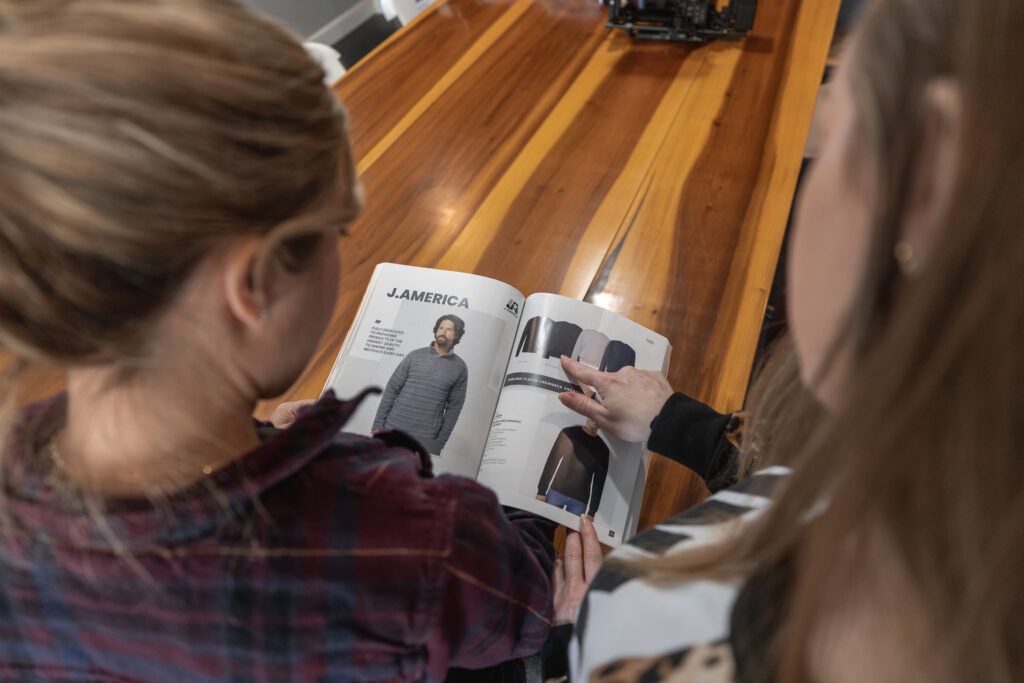
You’re buying a finished uniform.
That difference matters.
A blank garment can look perfect on a price sheet, but it still has to meet your logo, your decoration method, your employees, and their working environment.
And those four things don’t always get along.
A lightweight tee might sound ideal until you consider what you’re printing on it and where employees will wear it. A stretchy performance shirt behaves differently from traditional cotton. A polo intended for embroidery needs enough stability to carry the design well.
Then there are the people wearing everything.
Put yourself in the shoes—or shirt—of a landscaping crew working outside all day.
They’re not thinking:
What excellent unit economics this garment offers.
They’re thinking:
Why is this thing so hot?
An office employee may care about something entirely different. They might want a polo that keeps its shape and still looks sharp at 4:30 p.m.
A construction worker might care most about movement, durability, and whether the shirt survives frequent washing.
Same logo.
Completely different jobs.
That’s where apparel buying gets more interesting than simply sorting a catalog from lowest price to highest.
The best-value garment is the one that makes sense after you account for what you’re asking it to do.
Sometimes that will absolutely be the least expensive option.
If a basic shirt handles the work, accepts the decoration well, feels comfortable, and meets the expected lifespan, you’ve made a smart purchase. Spending more simply because something is labeled “premium” doesn’t magically improve the economics.
But if saving $2 creates discomfort, poor decoration performance, faster replacement, or another problem down the road, you haven’t necessarily created the cheapest order.
You’ve just moved part of the bill into the future.
The first order is usually the easy one.
You choose a garment. Confirm the sizes. Approve the artwork. Production happens. Boxes arrive.
Done.
Until somebody needs another shirt.
Maybe you hired six people, an employee changed sizes, a department grew, or somebody introduced a white company shirt to a very enthusiastic cup of coffee.
Whatever happened, you need more.
Now you discover whether your original garment choice can handle something apparel programs don’t talk about enough:
the sequel.
Is the same shirt still available?
Can you get every size?
Is your color still in stock?
Can you order 24 more without having to change garments?
For a one-time event, none of this may matter. You order 300 shirts, everyone wears them on Saturday, and the story ends there.
Uniform programs rarely get such a clean ending.
People come and go. Teams expand. Shirts get stained. Seasons change. Sizes change. New locations open. Someone inevitably realizes on Wednesday that four employees need shirts by Monday.
When your original style isn’t available, the simple solution is to substitute another one.
Except the new navy isn’t quite the old navy.
The fit is slightly different.
The fabric has another texture.
And when you decorate it, the finished result isn’t identical either.
Now you have two uniforms pretending to be one.
The original savings may have been completely legitimate, but your team is now spending time solving a problem that the initial quote never showed.
That’s the sneaky part about replacement costs.
They don’t arrive neatly packaged as one expense.
They show up as another email, another size list, another approval, another purchase order, another shipment, another round of sorting, and another hour somebody didn’t expect to spend thinking about shirts.
For a company managing five employees, that may not matter much.
For an organization managing 50, 500, or multiple locations, it starts to matter a lot.
A dependable garment with steady availability might cost slightly more per piece while requiring much less attention over time.
And sometimes that is what creates the cheapest order.
Not the biggest discount.
The fewest headaches.

There is an easy mistake to make here.
If cheap shirts can become expensive, then expensive shirts must be better.
Not so fast.
Imagine buying premium, long-lasting shirts for a one-day volunteer event.
They’re beautifully made.
The fabric is fantastic.
Everyone loves them.
And most of them will spend the next five years helping people mow their lawns.
You bought quality.
You may not have bought value.
A promotional event, construction crew, restaurant, municipal department, landscaping company, school staff, office team, and marine business can all need different things from apparel.
That’s why the smartest purchasing conversation doesn’t begin with:
“What’s your best shirt?”
It begins with:
“What does this shirt need to do?”
How often will employees wear it?
Does it need to survive outdoor conditions?
How important is comfort?
Will you need to reorder the same style next year?
Which decoration method are you using?
How long do you realistically expect the garment to remain in rotation?
Those answers create the context that price alone can’t.
Maybe the cheapest shirt checks every box.
Perfect. Take the savings.
Maybe another garment costs $2 more but feels noticeably better, works more effectively with your decoration, maintains its appearance longer, and remains consistently available.
In that case, paying more isn’t automatically “upgrading.”
It may simply mean buying the appropriate tool for the job.
That’s the difference between cheap and cost-effective.
Cheap describes the moment money leaves your account.
Cost-effective describes what happens afterward.
Here’s the strange thing about company apparel: the best order can be incredibly uneventful.
Nobody emails you because the shirts still fit, schedules a meeting because the logo still looks good, or calls purchasing to celebrate that the same sizes remain available.
Nobody sends an urgent message saying:
Good news. We don’t need anything.
Things simply work.
Employees wear the shirts. Managers don’t think about them. New hires get what they need. Reorders happen without drama.
And that’s exactly the point.
At Morningstar, we think the smartest apparel decisions aren’t necessarily about moving up or down a price list. They’re about understanding what happens to a garment after it leaves the box.
Where will it go?
Who will wear it?
How often?
How will it be decorated?
What will it have to survive?
And when you need 30 more six months from now, what happens next?
Answer those questions before obsessing over a few dollars of unit price, and the conversation changes.
You stop searching only for the cheapest shirt.
You start looking for the shirt that makes sense.
Because the cheapest shirt isn’t always the one that makes your spreadsheet look brilliant today.
Sometimes it’s the one nobody has to talk about again for a very long time.
And in operations, that kind of silence can be worth quite a lot.