
Florida summer is brutal on outdoor crews. Here’s how to choose apparel that survives sun, sweat, and constant washing.
If you’ve ever spent a Florida summer working outdoors, you know the heat doesn’t just test people.
It tests everything they wear.
Construction crews pour concrete under relentless sunshine. Landscapers spend entire days mowing, trimming, and hauling equipment. Marine technicians battle UV rays reflected off the water. Utility workers respond to emergencies regardless of the temperature.
Their shirts absorb gallons of sweat, endure repeated exposure to sunlight, and get washed constantly.
Yet many businesses focus only on choosing a logo or shirt color—without considering whether the apparel itself can survive the conditions.
By August, the results are easy to spot.
Logos begin cracking.
Colors fade.
Prints peel.
Shirts lose their shape.
Instead of representing a professional company, worn-out uniforms send the opposite message.
The good news? Most of these problems are preventable.
Choosing the right summer workwear isn’t about buying the most expensive shirt. It’s about understanding how fabric, decoration methods, and garment construction work together to create outdoor uniform durability.
Here’s what every outdoor employer should know before placing their next order.
Why Florida summer is so tough on workwear?
Florida isn’t simply hot.
It’s a combination of environmental factors that accelerate garment wear.
Outdoor crews face:
- Daily temperatures approaching or exceeding 95°F
- High humidity that keeps fabrics saturated with sweat
- Intense ultraviolet (UV) exposure
- Dirt, saltwater, chemicals, and abrasives depending on the industry
- Frequent laundering—sometimes after every shift
Every one of these factors shortens the life of apparel.
Together, they create one of the harshest environments a work shirt can experience.
That’s why apparel that performs perfectly in an office or warehouse may fail quickly on a job site.
Sweat is harder on apparel than most people think
People usually associate sweat with discomfort.
But from a garment perspective, sweat is surprisingly destructive.
Moisture repeatedly expands and contracts fabric fibers.
Salt left behind after perspiration can slowly affect certain dyes and fabrics.
Even more importantly, sweaty garments require frequent washing.
And washing—not wearing—is often what causes the greatest damage over time.
Each wash cycle exposes apparel to:
- Water
- Detergents
- Agitation
- Heat from dryers
Multiply that by three to five washes every week, and a shirt can experience well over 100 wash cycles in a single year.
If the decoration wasn’t designed for that level of use, deterioration happens quickly.
UV exposure doesn’t only affect people
Most people understand the importance of sunscreen.
Few think about what sunlight does to company apparel.
Ultraviolet rays slowly break down dyes and fibers.
Over time, shirts that originally looked vibrant begin looking dull or uneven.
Dark colors often lighten.
Bright colors lose their richness.
Even the sharpest logo can begin looking tired simply because the garment itself has faded.
This is especially important for:
- Marine businesses
- Landscaping companies
- Road crews
- Construction contractors
- Utility providers
These teams spend entire workdays under direct sunlight.
Selecting garments designed to maintain color and structure under UV exposure helps extend the professional appearance of uniforms throughout the season.
Not all printing methods handle summer equally
The decoration method you choose for your summer workwear plays a major role in heat-resistant printing and long-term durability.
Different applications perform differently depending on how the garments will actually be used.
Screen Printing
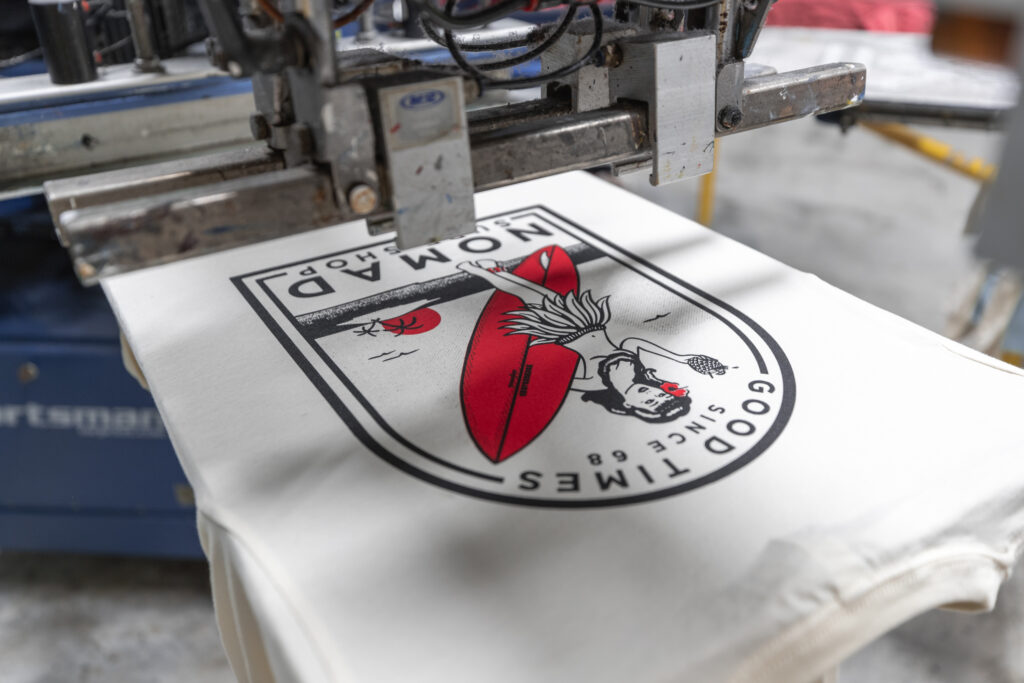
For many outdoor industries, properly cured screen printing remains one of the most durable decoration methods available.
The ink bonds deeply with the garment during the curing process, allowing it to withstand repeated washing and demanding work environments.
When produced correctly, quality screen printing offers:
- Excellent wash durability
- Strong color opacity
- Long-lasting logos
- Cost-effective pricing for larger orders
It’s often the preferred solution for construction, municipalities, landscaping companies, schools, and utility crews ordering uniforms in volume.
Embroidery
Embroidery offers exceptional longevity because the design is stitched directly into the garment.
Rather than relying on ink, embroidery creates a textured, premium finish that holds up extremely well through repeated use.
It’s an excellent choice for:
- Company polos
- Supervisor uniforms
- Government apparel
- Administrative staff
- Sales teams
While embroidery isn’t typically used on lightweight performance T-shirts, it remains one of the longest-lasting branding methods available.
DTF (Direct-to-Film)
Modern DTF technology produces vibrant, detailed graphics with excellent flexibility.
For smaller orders, full-color logos, or artwork with gradients, DTF provides impressive results.
When applied correctly using quality materials, DTF performs well for many businesses while allowing greater design flexibility than traditional screen printing.
Fabric matters just as much as decoration
Printing is only half the equation.
The shirt itself determines how comfortable employees remain throughout the day.
For your summer workwear, consider fabrics that offer:
Moisture Management
Performance fabrics help move perspiration away from the body, allowing moisture to evaporate more quickly.
This improves comfort while reducing the heavy, saturated feeling common with traditional cotton shirts.
Breathability
Lighter-weight fabrics improve airflow, helping crews stay cooler during long shifts.
Even small improvements in ventilation can noticeably increase comfort over an eight-hour workday.
Durability
Lightweight doesn’t have to mean fragile.
Quality workwear balances comfort with construction that resists stretching, shrinking, and excessive wear.
For crews working outdoors every day, investing in better garments often means replacing uniforms less frequently.
Think beyond the cheapest shirt
When purchasing uniforms for an entire crew, it’s tempting to compare only the price tag.
But replacement costs add up quickly.
Imagine two scenarios.
One shirt costs a few dollars less but needs replacement after a single summer.
Another lasts two full seasons while maintaining its appearance.
Which actually costs less?
The more durable option often delivers the better long-term value—even if its initial price is slightly higher.
That’s especially true when you consider:
- Reordering costs
- Administrative time
- Employee downtime
- Inconsistent branding across crews
- Rush production fees
Buying quality once often proves less expensive than replacing cheaper apparel repeatedly.
Match the apparel to the job
Different industries have different demands.
There’s rarely a one-size-fits-all solution.
Construction
Prioritize durable garments with long-lasting screen printing that can withstand heavy washing, dirt, and demanding job sites.
Landscaping
Choose lightweight performance shirts with breathable fabrics that help crews stay comfortable through long hours outdoors.
Marine
UV resistance, moisture management, and fade-resistant colors become especially important when employees work around water.
Utilities
Focus on apparel that balances comfort, durability, and consistent branding for teams working in changing weather conditions throughout the year.
Matching garments to the environment significantly improves employee satisfaction while extending apparel life.
Better workwear supports better business
Uniforms aren’t just another business expense.
They’re one of the few investments your employees interact with every single workday.
Comfortable crews are generally happier crews.
Professional uniforms reinforce customer confidence.
Durable apparel reduces replacement costs.
And consistent branding strengthens your company’s image wherever your employees go.
Choosing summer workwear that’s designed for Florida’s climate isn’t simply about surviving the heat.
It’s about protecting your brand through every job, every wash cycle, and every season.
Because when your logo still looks sharp after months of blazing sunshine, hard work, and repeated laundering, it says something important about your company.
It says you value quality.
It says you pay attention to details.
And it tells customers they’ll likely receive that same level of care from the work your team performs.
After all, if your uniforms can survive a Florida summer, they’re ready for just about anything.