
A drawer somewhere is filled with employee merch.
You know the drawer.
It has the shirt from the company picnic three years ago. The oversized event tee. The polo that never quite fit right. The “free” shirt everyone happily accepted and almost nobody wore again.
None of those shirts were necessarily bad.
They just weren’t good enough to become part of someone’s actual wardrobe.
And that’s where company merch often goes wrong.
We spend a lot of time thinking about what goes on the shirt.
We think about the logo, the colors, the slogan, and the placement.
But we do not spend enough time thinking about the person who has to wear it.
Because your employees aren’t walking billboards.
They’re people.
They have favorite shirts. Preferred fits. Strong opinions about collars. They know which hoodie they grab each chilly morning. They also know which T-shirt always ends up at the bottom of the laundry pile.
So if you want to create employee merch people actually want to wear, there’s a surprisingly simple place to start:
Make something worth wearing.
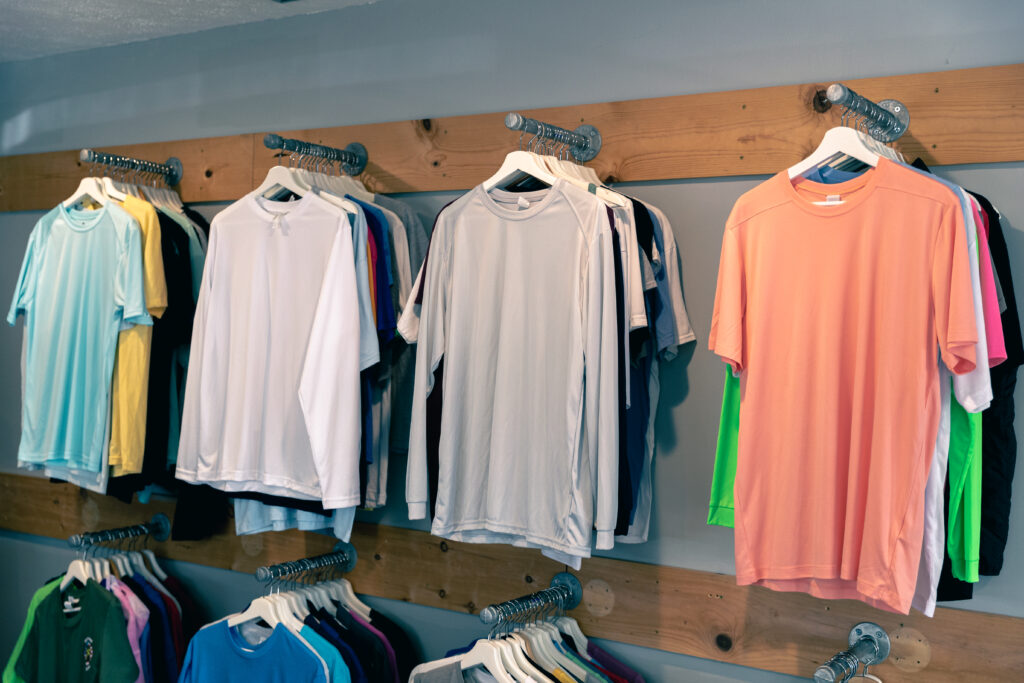
Here’s a little test we wish more companies used.
Take the logo away for a second.
Look at the blank garment.
Would you buy it?
Would you wear that polo for an eight-hour shift?
Would you grab that hoodie on Saturday morning?
Would you want to spend a Florida afternoon working outside in that shirt?
If the answer is “probably not,” a company logo isn’t going to change much.
This is why the cheapest shirt isn’t always the least expensive choice.
A $7 shirt worn twice is not always a better investment than a $12 shirt employees love.
The second one keeps showing up.
At work. At the grocery store. At school pickup. On a Saturday trip to Home Depot.
Nobody had to tell that employee to promote the company.
They just liked the shirt.
That’s the kind of branded apparel we think is worth making.
There isn’t one perfect company shirt.
And there shouldn’t be.
Think about a construction crew working outside in Vero Beach in August.
Now, think about the person answering phones in an air-conditioned office.
The project manager meeting a client.
The marine crew spending most of the day around sun, salt, heat, and water.
Putting all four people in exactly the same garment might make ordering easier.
It doesn’t necessarily make the apparel better.
For an outdoor crew, lightweight fabric, breathability, moisture control, and durability often matter more than the trendiest shirt.
For customer-facing employees, a comfortable embroidered polo might make more sense.
For managers, a quarter-zip or button-down may get far more use.
And sometimes, yes, the classic T-shirt really is the right answer.
The point isn’t to make the apparel fancy.
It’s to make it appropriate.
Good employee merch should fit into someone’s workday and not feel like a uniform they just tolerate.
There’s something nice about being asked:
“Which one would you actually wear?”
Maybe your employees can choose between a T-shirt and a performance shirt.
Maybe they can pick a polo or quarter-zip.
Maybe everyone gets a standard work shirt, but they choose their preferred hat.
Small choices make company apparel feel a little more personal.
Of course, there is a dangerous phrase hiding in that idea:
“Everyone can choose whatever they want.”
That’s how one simple apparel order turns into 63 emails, four spreadsheets, nine screenshots, and someone asking:
“Wait, which black polo did we use last year?”
Choice is good.
Chaos isn’t.
A better approach is to create a small, thoughtful collection of approved pieces.
Perhaps that’s two shirts, a polo, a hoodie, a hat, and an outerwear option.
Employees still get to choose something they genuinely like, while the company keeps colors, logos, quality, and branding consistent.
And whoever normally manages the orders gets to keep a little more of their sanity.
Everybody wins.
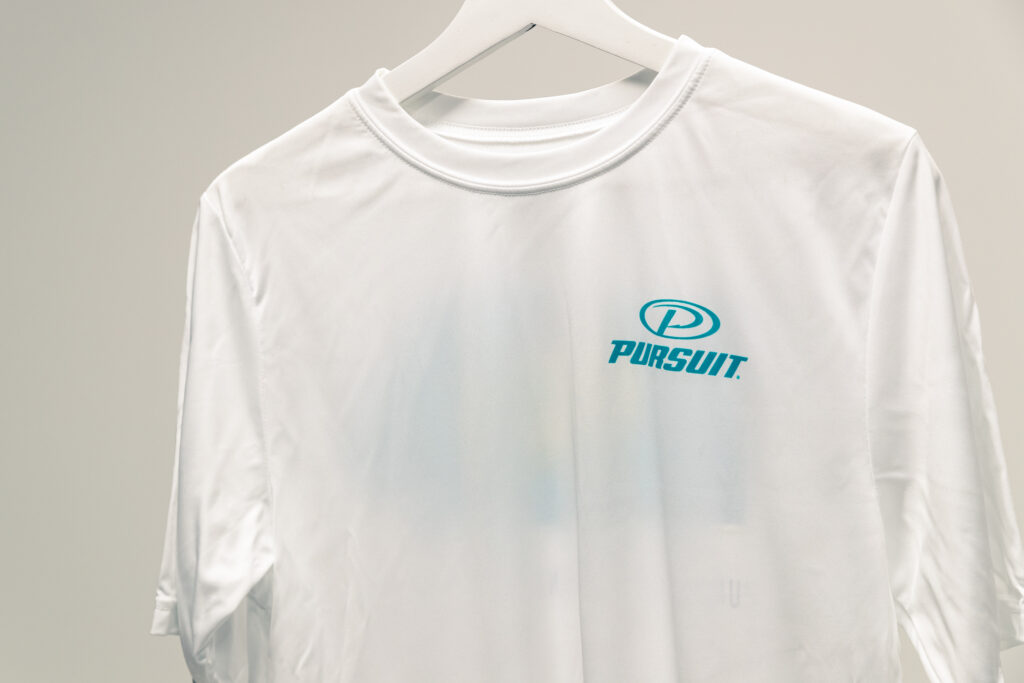
Sometimes companies feel like branded apparel has to make absolutely certain everyone within 40 feet knows whose shirt it is.
So the logo gets bigger.
And bigger.
And…
a little bigger.
There are times when that makes perfect sense. Event shirts, school spirit wear, crew identification, promotional pieces—go for it.
But everyday employee merch often benefits from a lighter touch.
A clean left-chest print.
A small embroidered logo.
A subtle sleeve mark.
A well-designed back print.
Tonal embroidery on a jacket.
The goal isn’t to hide the brand.
It’s to make the branding feel like it belongs on the garment.
Think about the clothes people willingly buy from their favorite brands. The branding often works because it’s part of the design rather than something pasted on top of it.
Company apparel can work the same way.
And when it does, employees are much more likely to wear it outside the exact hours they must wear it.
That’s when branded apparel starts doing something you can’t really force:
It travels.
A shirt looks fantastic when it comes fresh out of the box.
That’s the easy part.
We’re more interested in what it looks like after Tuesday.
And another Tuesday.
And another.
After you wash it 15 times.
After a construction crew has worked in it.
After it spends afternoons in the Florida sun.
After you stuff it into a gym bag, wash it again, dry it again, and wear it again.
That’s where garment quality and decoration method start to matter.
Screen printing, embroidery, and DTF all have their place. The garment, artwork, quantity, environment, and intended use of the finished piece determine the right choice.
A detailed, colorful design on a small run may require something very different from 200 work shirts that people will wash every week.
If you’re choosing between methods, start with the job the shirt has to do.
Screen printing is the workhorse. It’s cost-effective at higher quantities, holds up well to repeat washing, and looks great on bold designs with fewer colors. It’s often the best choice for uniforms, team shirts, and large event orders where consistency matters.
Embroidery is about texture and durability. It’s ideal for polos, hats, jackets, and workwear—especially when you want a clean, professional look that can take years of wear. It isn’t great for tiny details or large, full-front designs. It can feel heavier on thin shirts. But for chest logos or caps, it’s hard to beat.
DTF (Direct to Film) shines when you need full color, fine detail, gradients, and smaller quantities without the setup cost of screens. It’s flexible and versatile across many garments, and it can produce photo-like results. Like anything, it depends on good materials and proper application; a rushed process shows up after the first few washes.
So before you place the order, ask a few practical questions:
When those answers are clear, the right method usually becomes obvious—and the results hold up, Tuesday after Tuesday.An embroidered logo may look great on a polo. But it may not work across the front of a lightweight performance shirt.
There isn’t a magic decoration method that’s best for everything.
There is a right combination for the job.
And figuring out that combination is one of those things that’s much easier when your apparel partner asks a few questions before telling you what to buy.
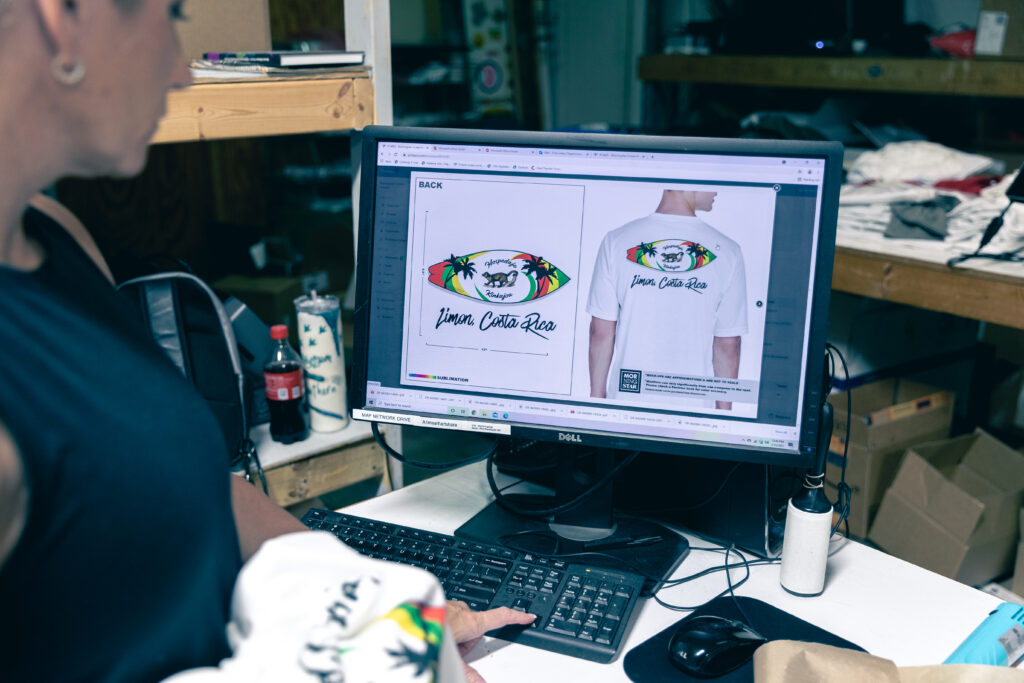
This might be our favorite way to think about employee merch:
Don’t design it for the day you hand it out.
Design it for six months later.
It’s easy to get excited when boxes of freshly decorated shirts arrive. Everything is folded. The colors are crisp. The logo looks perfect.
But six months later?
That’s the real review.
Are people still wearing them?
Has the decoration held up?
Did the fabric keep its shape?
Are employees asking if there are any extras?
Or did half the shirts quietly disappear into drawers?
The best compliment we can imagine for company apparel isn’t:
“The logo looks great.”
It’s:
“Do you have another one of these?”
That tells you almost everything.
There’s another moment that tells you whether your apparel program is working.
Someone new starts Monday.
What happens?
In one version, somebody suddenly realizes the new employee needs shirts.
Then the search begins.
Which style did we order last time?
Where’s the logo file?
What color was that polo?
Who has the sizes?
Wasn’t there a spreadsheet?
Which spreadsheet?
Now compare that with:
“Welcome aboard. Here are your apparel options.”
That’s a small operational difference that creates a very different experience.
The new employee feels expected.
The brand stays consistent.
The person managing apparel doesn’t have to reinvent the order every time somebody joins the team.
For growing organizations, this is usually the point where company merch stops being a series of orders and starts becoming a system.
And systems don’t have to be complicated.
Sometimes it’s simply having approved garments, stored artwork, known decoration methods, and an easy way to reorder.
Sometimes a larger organization benefits from an employee store or ordering portal.
The goal isn’t technology for technology’s sake.
It’s making the next order easier than the last one.
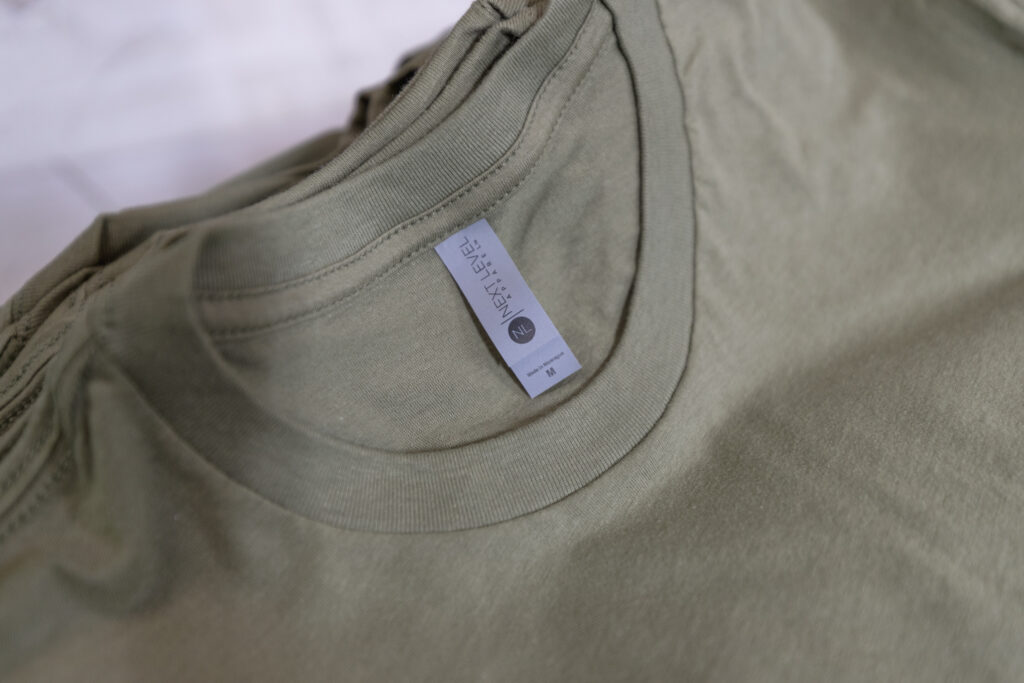
You can learn a surprising amount about your apparel program over lunch.
Ask your team:
“Which company shirt do you actually like?”
Then listen.
You might hear:
“The gray one from last year.”
“Those lightweight shirts we got for summer.”
“I like the hoodie, but the T-shirts are too heavy.”
“Can we get that polo again?”
“Anything except that one that shrinks.”
That’s useful information.
In fact, it’s probably more useful than another hour spent scrolling through a garment catalog.
Your employees have already field-tested your apparel.
They know what survived.
They know what stayed comfortable.
And they definitely know what they never want to wear again.
Use that.
This sounds like a strange thing for an apparel company to say.
But sometimes the answer isn’t more.
It’s better.
Instead of giving every employee three inexpensive shirts, perhaps one really good shirt and a quality hoodie would be appreciated more.
Instead of introducing five new styles every year, maybe you find two that everyone loves and keep them available.
Instead of redesigning everything because you’re bored with it, maybe you leave the thing that’s working alone.
The goal shouldn’t be filling closets with your logo.
The goal should be creating a useful collection that makes employees feel comfortable, looks consistent, and represents your organization well.
Sometimes that means ordering more.
Sometimes it means choosing differently.
A good apparel partner should be comfortable telling you both.
That’s ultimately what we’re after.
A shirt someone grabs without thinking about it.
A hoodie that somehow keeps disappearing from the employee’s closet because their spouse keeps borrowing it.
A polo that still looks good at the end of a long workday.
A hat that ends up on the boat Saturday morning.
Those moments are small.
But they’re a pretty good indication that you got the apparel right.
We’ve found that the best conversations usually don’t begin with:
“How many shirts do you need?”
They begin with questions.
Who is wearing them?
What kind of work are they doing?
Where will they be wearing them?
What’s worked before?
What hasn’t?
How often will you need to reorder?
Because once we understand those things, choosing the shirt, decoration method, and ordering approach gets much easier.
And whether you’re ordering for ten employees or trying to keep several departments organized, the goal is really the same:
Make good apparel. Make it easy to manage. And make something people are happy to put your name on.
That’s the kind of company merch that doesn’t end up in the drawer.
And we think that’s worth getting right.