
Time, temperature, and pressure sound simple—until one of them is slightly wrong.
There’s a strangely satisfying moment in an apparel shop when a heat press opens.
The handle comes up. The platen lifts. The garment is still warm. The transfer carrier is peeled away, and underneath it is a clean, sharp design that—if everything went right—is now bonded to the shirt.
It can look almost too easy.
Put the shirt down. Position the design. Close the press. Wait. Open it.
Done.
Except those few seconds under the press are doing far more work than they appear to be doing.
A temperature that is a little too low can leave a transfer barely hanging on. Too high, and certain fabrics can scorch or discolor. Too little pressure can create weak adhesion. Too much can leave unwanted marks or affect the finish of the garment.
And then there’s time.
A few seconds may not sound like much.
Under a heat press, they can be the difference between a decoration that becomes part of the garment and one that starts peeling away after a few trips through the laundry.
That’s why understanding the heat press printing process starts with three deceptively simple words:
Time. Temperature. Pressure.
But there’s a lot happening between them.
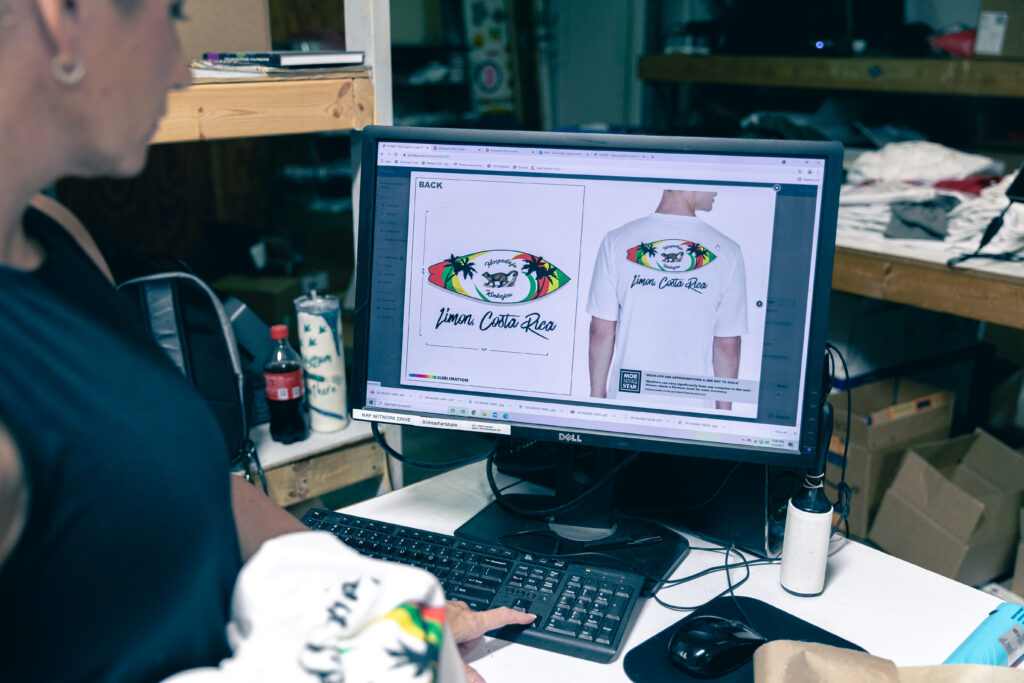
The heat press may be the star of the show, but the process actually begins before anyone closes it.
First comes the garment.
Cotton. Polyester. Cotton-poly blends. Performance fabrics. Stretch materials. Moisture-wicking shirts. Hoodies. Jackets.
They don’t all react to heat in the same way.
A heavy cotton sweatshirt and a lightweight polyester performance shirt might both receive a heat-applied decoration, but treating them exactly the same would be a mistake.
Some fabrics tolerate heat beautifully.
Others are less forgiving.
Polyester, for example, can be especially sensitive to excessive heat. Certain dyed garments can experience dye migration, where the garment’s color begins affecting the transferred design. Other fabrics can develop shiny press marks or visible discoloration when exposed to too much heat or pressure.
Then there’s the transfer itself.
In a DTF heat press application, for example, the artwork has already gone through its own process. The design is printed onto film, adhesive is applied, and the transfer is prepared for application.
Now that adhesive has a job to do.
It has to respond to heat, soften appropriately, and bond with the fibers of the garment.
So before the press ever closes, the operator needs to know something surprisingly important:
What exactly are we pressing—and what does it need?
Because there is no magical universal setting that works perfectly for every shirt, fabric, transfer, and application.
Here comes the part everyone sees.
The garment is positioned.
The transfer is aligned.
The platen comes down.
And for several seconds, the shirt disappears beneath a very hot piece of equipment.
This is where the heat transfer printing process becomes a balancing act.
Heat helps activate the adhesive system that allows the decoration to bond to the garment.
But hotter does not automatically mean stronger.
Imagine making toast.
Not enough heat and you’re basically eating warm bread.
Too much and breakfast becomes charcoal.
Heat pressing has its own version of that problem.
If the heat press temperature is too low, the adhesive may not activate or flow as intended. The transfer can look perfectly acceptable when the garment leaves the shop, yet have a weak bond hiding underneath.
That weakness often reveals itself later.
An edge begins lifting.
A corner curls.
After washing, part of the design separates from the garment.
On the other end of the spectrum, excessive heat can create an entirely different set of problems.
The garment may scorch.
Certain synthetic fabrics can become shiny.
Colors can shift.
The transfer itself can be affected.
The goal isn’t maximum heat.
The goal is the right heat.
Now imagine the temperature is correct.
Great.
We’re still not finished.
That heat has to be applied for the appropriate amount of time.
Too short, and the adhesive may never develop the bond it needs.
Too long, and you’re unnecessarily exposing the garment and decoration to heat.
This is why those seconds on a heat press matter.
From the outside, the difference between one pressing cycle and another may seem tiny. Inside the process, those seconds affect how the adhesive responds, how the garment reacts, and ultimately how well the decoration performs.
A timer isn’t there because apparel decorators really enjoy countdowns.
It’s there because consistency matters.
Especially when you’re not pressing one shirt.
You’re pressing 20.
Or 100.
Or hundreds.
The first shirt and the last shirt need to receive the same process.
Then comes the third member of the trio:
Pressure.
Heat can only accomplish so much if the transfer isn’t making proper contact with the garment.
The right heat press pressure helps bring the transfer, adhesive, and fabric together evenly.
Too little pressure can leave areas where the adhesive doesn’t properly engage with the fibers.
That can create:
But once again, “more” isn’t necessarily “better.”
Too much pressure can flatten certain fabrics, create visible platen marks, alter textures, or negatively affect the appearance of some garments and transfers.
What you’re looking for is even, appropriate contact across the entire design.
And that brings us to another problem.
Because shirts aren’t actually flat.
Look closely at a garment and you’ll find obstacles everywhere.
Seams.
Collars.
Buttons.
Pockets.
Zippers.
Drawstrings.
Thick hems.
Even slight differences in fabric construction can affect how evenly a shirt sits beneath the press.
Imagine placing a transfer near a thick seam.
The seam lifts one portion of the garment slightly higher than the rest. The press comes down, but now the pressure isn’t distributed evenly across the entire design.
One side receives solid contact.
Another doesn’t.
The result?
Part of the transfer may look perfect while another area struggles to adhere.
This is why positioning involves more than asking, “Does the logo look centered?”
Operators may need to adjust how a garment is loaded, isolate the print area, work around seams, or use pressing accessories to create a flatter surface.
It’s a tiny detail customers may never notice.
And that’s exactly the point.
When production is done well, most of the decisions behind it disappear into the finished product.
You simply get a shirt that looks right.
The frustrating thing about heat-transfer mistakes is that some appear immediately.
Others wait until later.
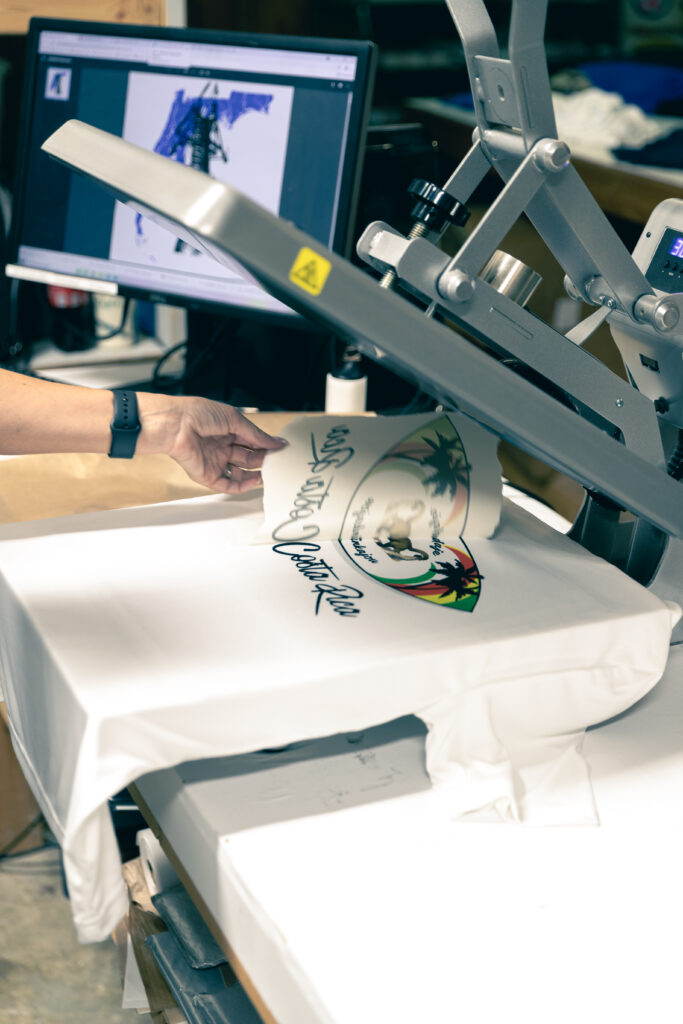
Peeling is probably one of the most recognizable failures.
A corner begins lifting.
Then an edge.
Eventually, part of the design starts separating from the shirt.
People sometimes assume peeling automatically means the transfer itself was “bad.”
Not necessarily.
Poor adhesion can come from several places: insufficient heat, insufficient pressing time, uneven or inadequate pressure, incompatible materials, contamination, or an application process that wasn’t appropriate for the garment.
The visible peeling is only the symptom.
The real problem happened earlier.
This one tends to show itself much faster.
A garment comes out from beneath the press with a shiny rectangle, an unexpected color change, or—in more severe cases—visible heat damage.
Some fabrics are simply more sensitive than others.
That’s why experienced decorators don’t treat every garment like a heavyweight cotton tee.
Understanding fabric behavior matters just as much as understanding the equipment.
Sometimes nothing dramatically fails.
The design just looks…off.
One area appears beautifully bonded while another doesn’t.
A small corner seems different.
The texture isn’t consistent.
Fine details don’t look as clean as expected.
Often, that points back to uneven contact.
A seam may have interfered. The garment may not have been sitting flat. Pressure could have been inconsistent across the application area.
The press may be a machine.
But getting the shirt properly prepared beneath it is still very much a human job.
This is the sneakiest one.
The shirt looks great when it leaves production.
Then it gets worn.
Washed.
Dried.
Worn again.
And that’s when a weak bond begins revealing itself.
That’s why judging a heat-applied decoration solely by how it looks five minutes after pressing doesn’t tell the whole story.
The real test is what happens after the shirt becomes what it was always meant to be:
a shirt someone actually wears.
The heat press opens.
The transfer is applied.
We’re done, right?
Sometimes.
But depending on the transfer system, there may be additional steps.
Some transfer films are peeled while warm. Others need to cool before removal. Certain applications benefit from or require a second press according to the transfer manufacturer’s process.
That second press may help improve the final finish or reinforce the application.
And again, the details matter.
How long?
At what temperature?
With what pressure?
What protective sheet or finishing method is appropriate?
There isn’t one universal answer because the correct process depends on the transfer system and garment being used.
Professional heat pressing isn’t about memorizing one magic combination of numbers.
It’s about understanding how the variables work together—and following a repeatable process for the specific materials in front of you.
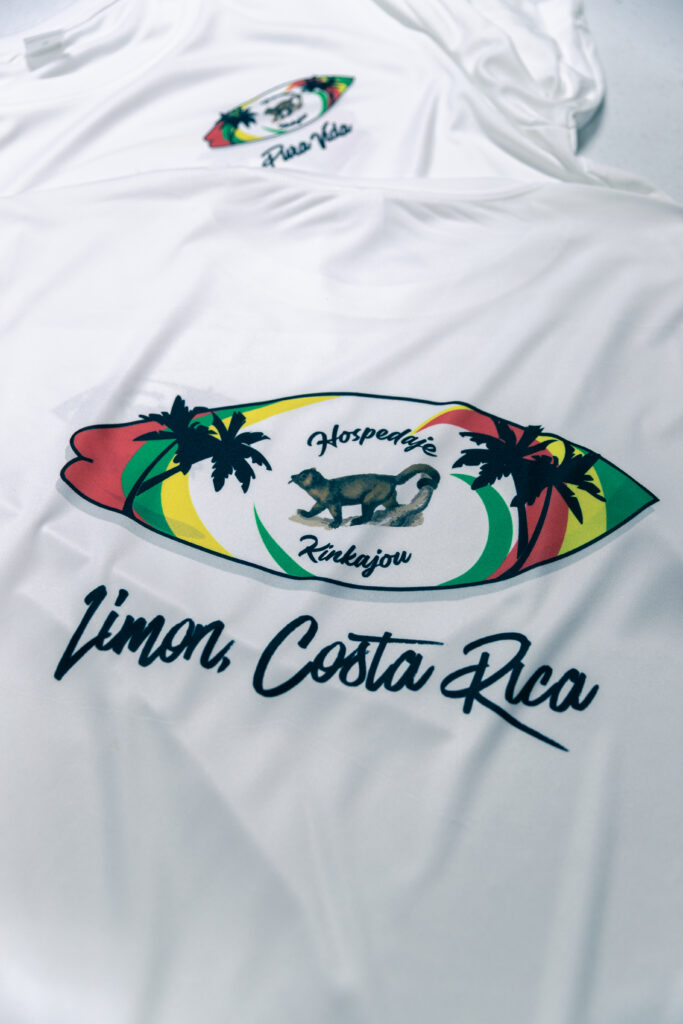
Nobody receives a company shirt and says:
“Wow. Whoever produced this absolutely nailed the relationship between dwell time, platen temperature, substrate compatibility, and pressure.”
At least, probably not.
They put it on. They go to work. They wash it. They wear it again.
And weeks or months later, the logo is still where it’s supposed to be.
That’s the funny thing about good apparel production.
When it’s done correctly, the technical work becomes almost invisible.
The temperature was right.
The timing was right.
The pressure was right.
The garment was positioned correctly.
The transfer matched the fabric.
The operator paid attention.
And the result simply works.
That matters even more when the shirts aren’t just promotional giveaways.
They’re uniforms.
Crew shirts.
Event apparel.
School gear.
Company merchandise.
Pieces people may wear every week.
Because the real goal isn’t to make a transfer look good while it’s sitting on a production table.
It’s to make it look good after it leaves one.
At Morningstar, that’s how we think about heat-applied decoration. The machine matters, of course. But the settings, materials, preparation, testing, and people behind it matter just as much.
A heat press may only stay closed for a few seconds.
Getting those few seconds right takes considerably more thought.
And when everything comes together?
The press opens.
The film comes away.
The design looks clean.
And all that science, heat, pressure, and careful decision-making becomes something wonderfully ordinary:
a shirt you don’t have to worry about.