
Picture this.
It’s 4:47 PM on a Tuesday.
Your phone buzzes.
“We completely forgot about the trade show.”
Or maybe:
“Half the new hires start Monday.”
Or the classic:
“Can we get 300 shirts by Friday?”
You brace yourself, call your apparel partner, pay the rush fee, and breathe a sigh of relief.
Problem solved… right?
Not exactly.
Most people assume the extra charge on the invoice is the entire cost of a rush apparel order.
It isn’t.
In reality, the rush fee is often the smallest part of what an emergency order truly costs.
The bigger expenses don’t always appear as line items. They show up in lost choices, interrupted workflows, preventable mistakes, and operational headaches that linger long after the shirts have been delivered.
Let’s pull back the curtain.
The Rush Fee Is Just the Beginning
Rush fees exist for a reason.
Producing custom apparel quickly requires rearranging schedules, prioritizing your order, extending production hours, and compressing timelines that normally allow for careful planning.
Those are real costs.
But here’s what many businesses overlook:
The hidden costs surrounding the rush apparel order often outweigh the fee itself.
Hidden Cost #1: Your Team Loses Valuable Time
Every emergency order creates a chain reaction inside your organization.
Someone has to:
- Gather employee sizes
- Find old artwork
- Confirm logo versions
- Track inventory
- Get management approvals
- Coordinate delivery
- Answer everyone’s questions
Normally, these tasks happen over several days.
During a rush order? They’re squeezed into hours.
Instead of focusing on customers, projects, or operations, multiple employees suddenly become an emergency apparel team.
That lost productivity never appears on the invoice. But it absolutely affects your business.
Hidden Cost #2: Your Options Shrink
Need shirts in three days?
You probably won’t have access to every garment, every color, or every decoration method.
Maybe the exact polo your team loves is backordered, your preferred hoodie can’t arrive in time, the specialty ink you wanted requires additional curing time.
Suddenly you’re making decisions based on availability—not what’s actually best for your brand.
Instead of asking, “What’s the best product?”
You’re asking, “What can we get by Friday?”
Those are two very different conversations.
Hidden Cost #3: Shipping Gets Expensive—Fast

This is one of the biggest surprises for many businesses.
When deadlines tighten, shipping often becomes the most expensive part of the order.
Instead of standard freight, you’re paying for:
- Overnight delivery
- Two-day air
- Priority shipping
- Expedited supplier freight
Sometimes shipments even have to be split.
Blank garments may come from one warehouse.
Decorated items may ship separately.
Missing pieces may follow later.
Each shipment adds more transportation costs—and more chances for delays.
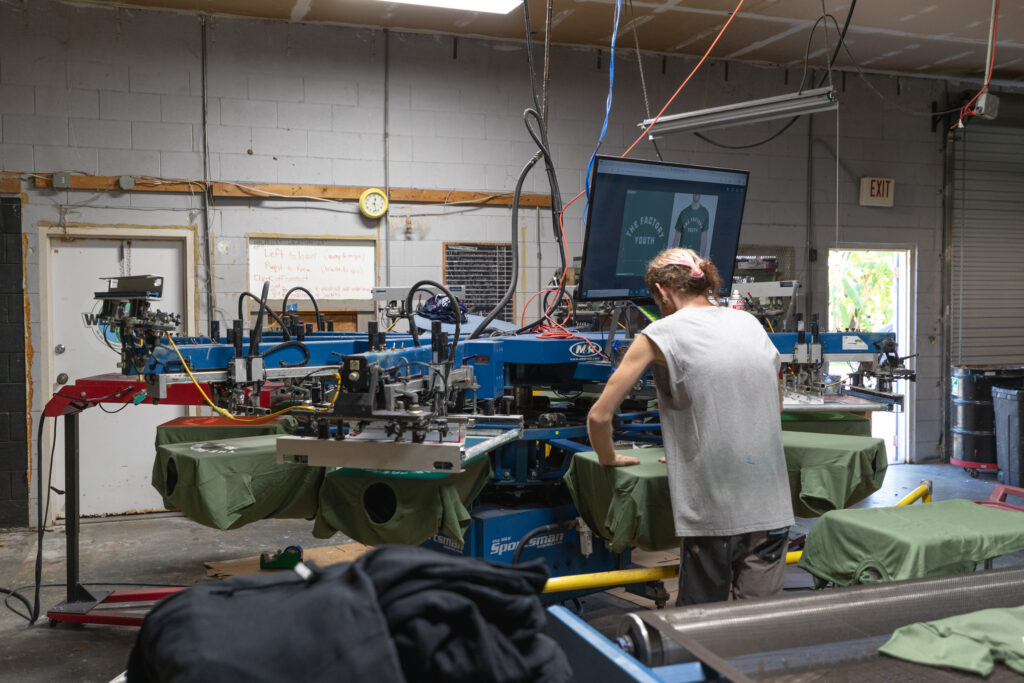
Hidden Cost #4: Production Has to Be Rearranged
Imagine a print shop with several projects already scheduled.
Screens are prepared.
Embroidery machines are running.
Orders are lined up.
Then a rush job arrives.
To fit it in, something else has to move.
Production schedules are reshuffled.
Equipment is reset.
Materials are pulled.
Staff priorities change.
Rush orders don’t simply get added to the schedule.
They often interrupt it.
That’s why reputable decorators charge rush fees—they’re compensating for the disruption required to meet an accelerated deadline.
Hidden Cost #5: Approvals Become Rushed
The faster the timeline…
…the less time everyone has to review the details.
Artwork approvals become quicker.
Proofs receive less scrutiny.
Sizing spreadsheets get skimmed.
Addresses are copied in a hurry.
Most apparel mistakes don’t happen because printers aren’t paying attention.
They happen because everyone involved has less time to catch them.
One incorrect logo.
One outdated version.
One missing employee.
One typo.
One overlooked email.
Small mistakes become expensive when there’s no time left to correct them.
Hidden Cost #6: Future Rework
Here’s something many businesses don’t connect.
Today’s rush apparel order often creates next month’s rush order.
Maybe only enough shirts were ordered to survive the immediate event, inventory wasn’t reviewed, or no one had time to think about upcoming hires.
Now, a few weeks later…
You’re placing another emergency order.
The cycle repeats.
Rush.
Before long, apparel management feels reactive instead of intentional.
And every emergency costs more than the last.
The Domino Effect No One Plans For
Rush apparel orders rarely affect just one department.
Operations wants uniforms.
HR needs onboarding kits.
Marketing needs event shirts.
Purchasing wants quotes.
Accounting wants invoices.
Managers want updates.
One delayed apparel order can ripple across an entire organization.
That’s why apparel isn’t just about shirts.
It’s part of your operational system.
When one piece gets rushed, the rest of the business often feels it too.
Life happens.
Trade shows move.
Employees get hired unexpectedly.
Equipment breaks.
Customers make last-minute requests.
Some rush orders are unavoidable.
But many aren’t.
The companies that experience fewer emergencies usually have one thing in common:
They treat apparel as something they manage year-round—not something they remember only when they run out.
How to Reduce Emergency Orders
You don’t need a complicated inventory system to avoid most rush situations.
A few proactive habits can make a huge difference:
Review inventory quarterly.
Know what you have before someone discovers empty shelves.
Forecast upcoming events.
Think beyond this month’s needs. Consider hiring plans, conferences, safety initiatives, and seasonal demand.
Keep approved artwork organized.
The fewer emails spent searching for “the latest logo,” the faster—and more accurately—production can begin.
Build in approval time.
Giving stakeholders even an extra day to review proofs can prevent costly errors.
Partner with a reliable apparel decorator.
A trusted partner can help forecast demand, recommend stock alternatives, and flag potential supply issues before they become emergencies.
Planning Costs Less Than Panic
There’s nothing wrong with paying a rush fee when it’s truly necessary.
Sometimes it’s the only way to keep a project on track.
But if emergency orders have become routine, the rush fee probably isn’t your biggest expense anymore.
It’s the overtime.
The expedited freight.
The interrupted schedules.
The limited choices.
The split shipments.
The missed approvals.
The reorders.
And the hours your team spends putting out fires instead of moving the business forward.
The invoice may show one extra line item.
The real cost is everything that line doesn’t capture.
Don’t Just Order Shirts—Build a Better Apparel System
At Morningstar, we know that custom apparel is more than ink on fabric. It’s part of how your business operates every day.
Whether you’re outfitting construction crews, schools, churches, municipalities, or growing businesses, we help you plan ahead with dependable production schedules, expert guidance, and decoration methods that fit your goals—not just your deadline.
Because the most affordable rush order…
…is the one you never have to place.